




- New commercial access control system installation
- Key card and key fob entry systems
- Door card readers and commercial keypads
- Mobile-compatible access options
- Single-door and multi-door systems
- Access control replacement and expansion
- Employee, tenant and vendor permissions
- Video intercom and visitor entry integration
What a Commercial Access Control System Does
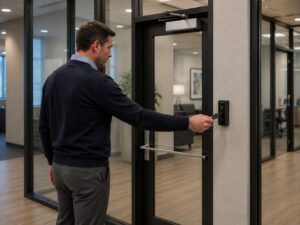
A commercial access control system allows a business or property manager to decide who may enter each secured door and when that access is permitted. Instead of distributing mechanical keys that may be copied or not returned, the organization issues individual electronic credentials. A lost card or fob can usually be disabled without replacing the lock or changing credentials assigned to other users. Depending on the selected system, access permissions may be organized by employee, department, tenant, building area or work schedule. Entry activity may also be recorded when the system and configuration support that function.
Practical Control of Business Entrances
Access control can be used at main employee entrances, private offices, server rooms, records areas, inventory rooms, loading areas, equipment spaces and other restricted commercial doors. The system should make authorized entry convenient while giving the business a manageable way to add users, remove credentials and update permissions as personnel or tenants change.
Commercial Entry Options
Key Card Access Systems
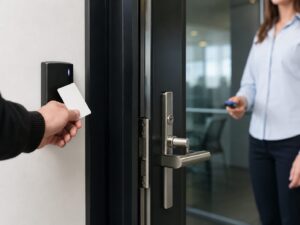
Key cards provide each authorized user with an individual credential. A card may be assigned to selected doors, schedules or access groups depending on the capabilities of the system. Cards are commonly used for offices, commercial buildings, warehouses and multi-tenant properties where administrators need to manage many users from one platform.
Key Fob Access Systems
Key fobs provide similar controlled entry in a compact credential that can be carried on a key ring. They can be convenient for employees, tenants, maintenance teams and property personnel who need regular access to a building. Learn more about our commercial key card and key fob systems.
Door Card Readers
A commercial door reader detects an approved card, fob or compatible mobile credential and sends the request to the access control system. Reader selection must be coordinated with the entrance, locking hardware, wiring and operating environment. Readers may be installed at exterior entrances, employee doors, shared building entrances and restricted interior rooms.
Commercial Keypad Entry
A keypad allows approved users to enter a code instead of carrying a physical credential. Keypads may be practical for selected staff entrances, service areas or doors used by a limited group. Individual codes are preferable to one shared code when the system supports separate user credentials and administrators need better control over access changes.
Mobile Door Access
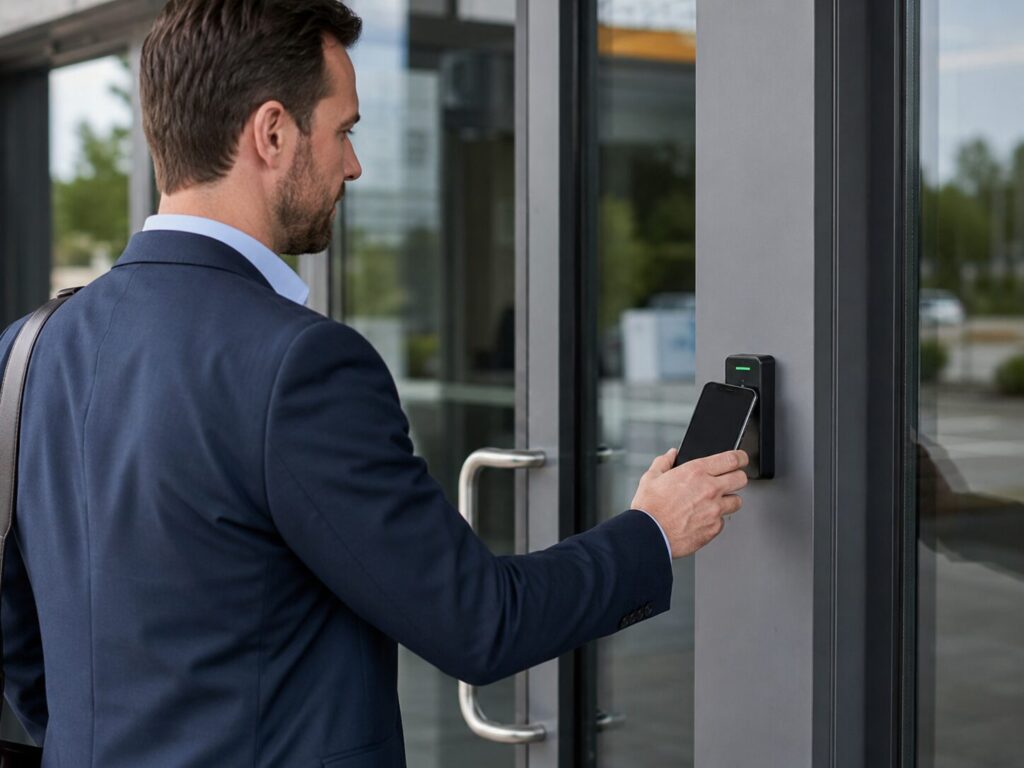
Compatible systems may allow authorized users to present a smartphone as a mobile credential. Mobile access can reduce the number of physical cards issued and may simplify credential distribution for selected users. Availability depends on the access control platform, readers, software and mobile credential service selected for the project.
Access Control for Commercial Properties
Office Access Control
Offices may need to secure employee entrances, private departments, server rooms, records storage and shared commercial doors. Different access permissions can be assigned to staff, managers, maintenance personnel and temporary users. An office system may begin with one entrance and later expand to additional doors as the company grows or its security requirements change.
Warehouse and Manufacturing Access Control
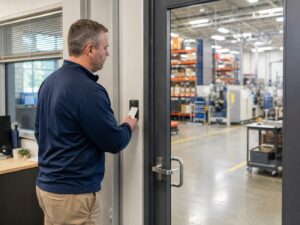
Warehouses and manufacturing facilities can use access control to manage staff entrances, inventory rooms, equipment areas, loading-related doors and restricted production spaces. Permissions may be organized by department, employee role, shift or work schedule. This allows employees to reach the areas required for their jobs without automatically granting access to every secured part of the facility.
Multi-Tenant and Managed Buildings
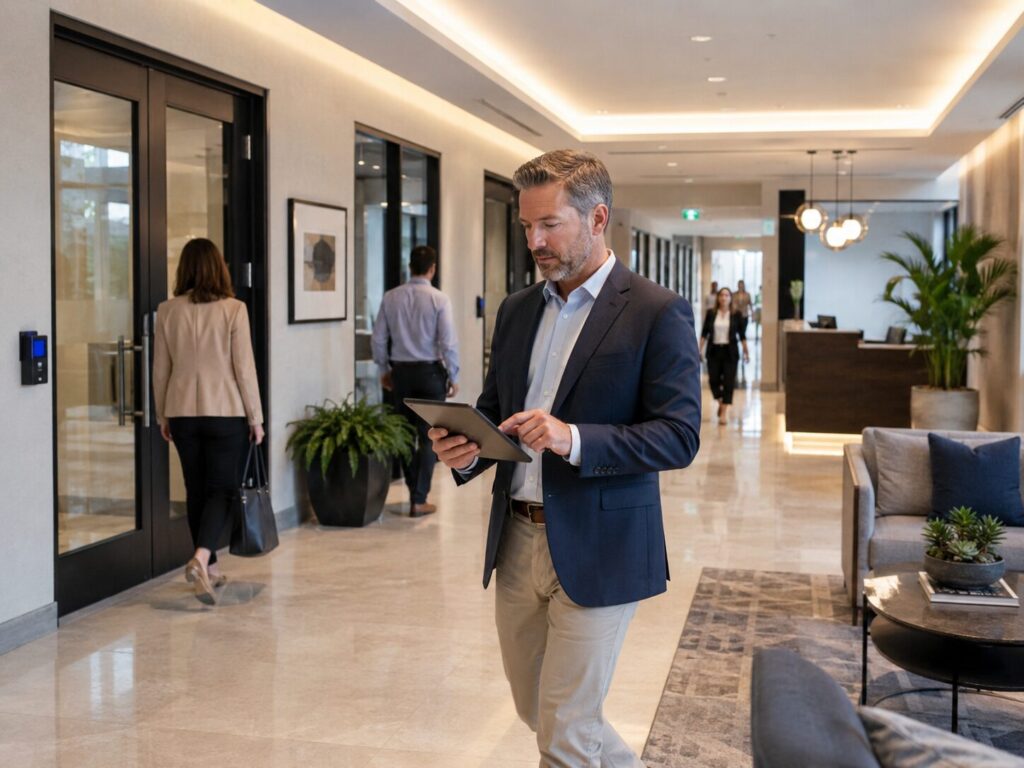
A managed commercial building may require separate access for tenants, property staff, cleaning teams, contractors and approved vendors. Electronic credentials can be updated when tenants or personnel change. A centralized system also makes it easier to manage several common entrances without maintaining unrelated locks, keys and user lists.
Retail and Mixed-Use Commercial Properties
Retail and mixed-use properties may need controlled employee entrances, stockrooms, management areas, service corridors and shared building doors. The final system design depends on how employees, tenants, deliveries and visitors move through the property during business and non-business hours.
Single-Door and Multi-Door Access Control
Single-Door Systems
A single-door access control system may be suitable for an employee entrance, server room, stockroom, records area or other restricted space. Even a one-door project requires coordination between the reader, electronic lock, power equipment, request-to-exit device and door conditions.
Multi-Door Systems
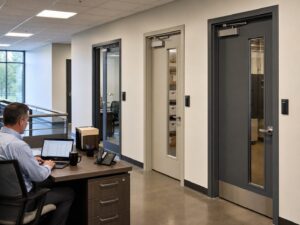
A multi-door system provides centralized management of several entrances and user groups. It may support:
- Different access permissions for employees and managers
- Separate tenant or department access groups
- Scheduled access for selected users
- Fast removal of lost or inactive credentials
- Management of exterior and interior doors
- Expansion when more doors or users are added
- Entry records when supported by the system
Businesses comparing available configurations can also review our door access control systems in Chicago.
New Installation, System Expansion and Replacement
New Access Control Installation
A new commercial access control project begins with the entrances, users and operating requirements of the property. Reader locations, electronic locking hardware, controllers, power equipment and credential management should be planned as one working system.
Expanding an Existing System
An existing system may be expanded when its controllers, software and licensing support additional doors and users. The current equipment must be reviewed before assuming that new readers can be added. Expansion planning should also account for controller capacity, available power, network requirements and the possibility of future doors.
Replacing an Older Access Control System
Replacement may be appropriate when readers are unreliable, software is difficult to manage, credentials are no longer readily available or the system cannot support additional doors. Fresh USA can review the existing readers, controllers, wiring and electronic locks to determine whether the project requires a complete replacement or selected equipment upgrades. Existing wiring or locking hardware may sometimes be reused when it is compatible, properly installed and in suitable condition. This must be determined during the site review.
What Commercial Access Control Installation May Include
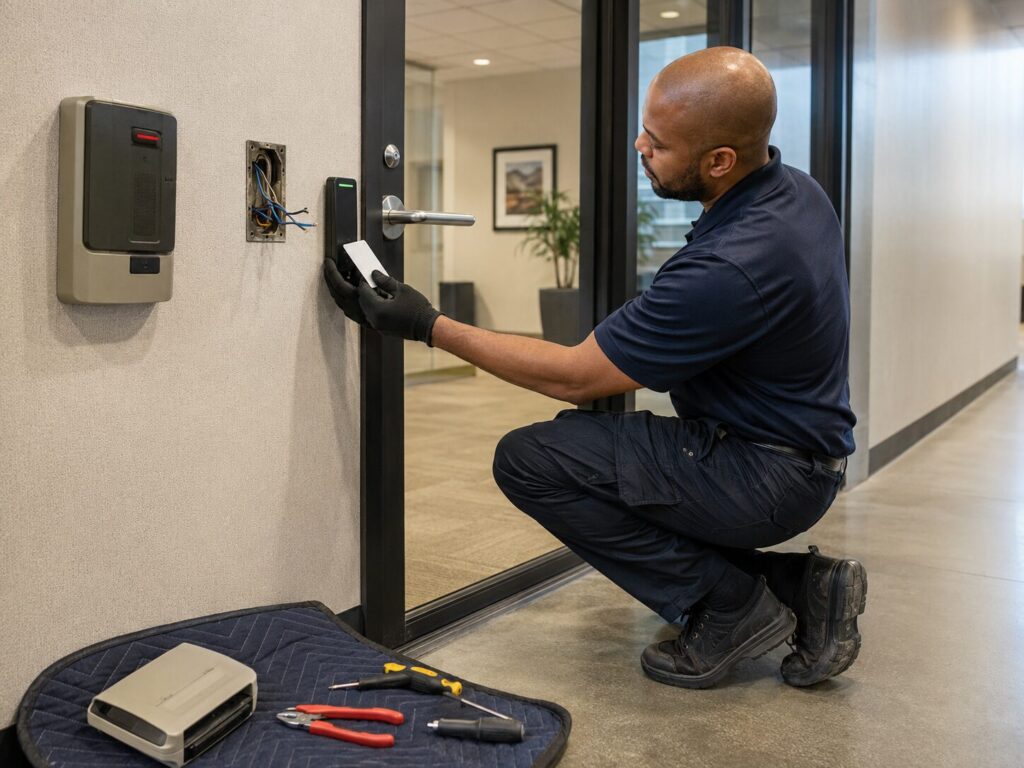
The exact scope depends on the number of entrances, existing door conditions and selected credential type. A commercial project may include:
- Review of doors and access requirements
- Card, fob, keypad or mobile-compatible readers
- Electronic strikes, magnetic locks or other compatible locking hardware
- Access control panels and door controllers
- Power supplies and backup power equipment
- Door position monitoring
- Request-to-exit devices
- Credential and user permission configuration
- Access schedules for selected users
- System testing
- Basic administrator guidance
The objective is not simply to attach a reader to a wall. The reader, door hardware, controller, power and software must work together as a manageable commercial entry system.
How Fresh USA Plans an Access Control Project
1. Discuss the Property and Doors
We begin by identifying the property type, number of entrances, existing equipment and the people who require access.
2. Review the Site
The site review helps identify door construction, locking hardware, reader placement, wiring conditions, power requirements and system capacity.
3. Select the Entry Method
The business can compare key cards, key fobs, keypad codes and compatible mobile credentials based on daily use, administration and future expansion.
4. Define User Permissions
Access groups may be planned for employees, managers, tenants, maintenance teams, vendors and temporary users.
5. Install and Test the System
After installation, secured doors, readers, locks, exit devices and user credentials are tested as part of the completed system.
Video Intercom and Visitor Entry Integration
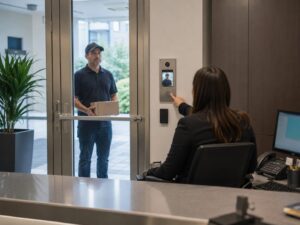
Employee credentials solve a different problem from visitor entry. A video intercom allows staff or property personnel to see and speak with a visitor before releasing a secured entrance. This can be useful for offices, managed buildings and commercial properties that receive guests, deliveries, contractors or service providers. Learn more about commercial video intercom and door buzzer installation. Access control may also be planned alongside compatible video surveillance equipment when a property needs visual coverage of entrances and restricted areas. Integration options depend on the selected systems and project requirements.
Choosing the Right Commercial Access Control System
The best system is not determined by one reader specification. It depends on how the building operates and how the business expects the system to be managed. Important planning questions include:
- How many doors need to be secured?
- How many employees, tenants or vendors require access?
- Should different users enter different areas?
- Should access be limited by days or working hours?
- Are cards, fobs, codes or mobile credentials preferred?
- Does the property already have electronic locks or wiring?
- Will additional doors be added later?
- Is visitor entry through a video intercom required?
- Who will manage users and credentials after installation?
A commercial system should meet current requirements without creating unnecessary complexity for the people responsible for managing it.
Commercial Access Control Installation in Chicago and Nearby Suburbs
Fresh USA provides commercial access control systems and installation throughout Chicago and nearby communities from its Greater Chicago offices. Current access control service pages include:
- Commercial Access Control Installation in Chicago
- Door Access Control Systems in Chicago
- Access Control Installation in Northbrook
- Access Control Installation in Vernon Hills
Additional commercial projects are available throughout the North Shore, northwestern suburbs and the greater Chicago area based on project scope and scheduling.
Frequently Asked Questions
What is a commercial access control system?
A commercial access control system manages who may enter selected doors within an office, warehouse, managed building or other business property. Users may enter with key cards, key fobs, keypad codes or compatible mobile credentials.
How much does a commercial access control system cost?
Cost depends on the number of doors, existing door hardware, wiring conditions, locking equipment, credential type, system capacity and installation requirements. A site review or detailed project description is normally required for an accurate proposal.
Can access control be installed on only one door?
Yes. A single-door system may be installed for an employee entrance, server room, records room, stockroom or another restricted commercial area.
Can different employees access different doors?
Yes. Individual users or access groups can be assigned to selected doors and schedules when supported by the chosen system.
What happens when a key card or fob is lost?
The lost credential can usually be disabled and replaced without changing the electronic lock or replacing credentials assigned to other users.
Can existing wiring or electronic locks be reused?
Possibly. Existing wiring and locking hardware must be inspected for condition, compatibility and suitability before reuse can be confirmed.
Can an existing access control system be expanded?
Possibly. The current controllers, software, licensing, wiring and power capacity must be reviewed to determine whether they support additional doors and users.
Can access control connect with a video intercom?
Yes, compatible access control and video intercom equipment may be planned together so authorized staff can communicate with visitors and release a secured entrance.
Do you install commercial access control throughout the Chicago suburbs?
Yes. Fresh USA serves commercial properties throughout Chicago, the North Shore and nearby suburbs. Project availability depends on the property location, system scope and scheduling.
Commercial Access Control System Overview
Request a Commercial Access Control Proposal
Tell Fresh USA what type of property you manage, how many doors need to be secured, what equipment is already installed and how employees, tenants or visitors should enter. We will help you compare key card, key fob, keypad and compatible mobile access options for a new installation, system expansion or replacement project.