Smart closet storage ideas start with the space that is difficult to use. Deep sections, narrow corners, attic slopes and areas under stairs can hide valuable storage potential, but each needs a practical access plan.
Fresh USA helps customers evaluate smart closet storage ideas involving suitable motorized wardrobe equipment.
This guide focuses on room challenges. For current equipment models and prices, visit the closet carousel models and options. For sorting clothes in an already equipped wardrobe, use the everyday wardrobe organization guide.
Smart Closet Storage for Deep Sections
Practical storage ideas for deep rooms should make the rear section usable without crowding the entrance. A fixed rail can work where clothing remains easy to reach. Moving garment storage may be worth evaluating when access to the back becomes awkward.
Measure the full clothing envelope and the walking area. Smart closet storage ideas should improve access rather than simply add more nominal positions in a space that is already difficult to enter.
Corners and Irregular Walls
A corner may work well for fixed shelving, a hanging zone or selected powered storage. Useful practical storage ideas begin with a sketch of the walls, doors and projecting cabinetry. Confirm the available equipment shape before designing around it.
Consider how an item will be retrieved and returned. Do not assume every corner needs moving storage; an accessible fixed shelf may suit smaller accessories.

Smart Closet Storage in Attics
Smart closet storage ideas for attic rooms need height measurements at several points. Clothing must clear the lowest part of its planned travel route. A central height measurement alone can conceal restrictions at the edges.
Locate any beams, roof slopes and low access openings. Compact shelf-style equipment may be an option to review, but its supports and garment clearance must suit the room. Practical storage ideas should retain access to the items after the installation is complete.
Closet Storage Ideas Under Stairs
Under-stair areas often change height quickly. Evaluate fixed storage for low sections and possible hanging space in taller sections. Practical storage ideas should follow these changes rather than treat the whole area as a rectangular room.
Show the access opening, usable depth and stair underside on your sketch. A moving system requires clearance throughout the route, so submit photographs before choosing a powered arrangement.

Smart Closet Storage on Narrow Walls
Smart closet storage ideas for a narrow wall can combine a focused hanging section with nearby fixed storage. Compare the space occupied by supports, controls and moving clothes. Keep drawers and the dressing area usable.
The compact electric rotating clothes rack guide explains compact powered hanging configurations. Compare the broader equipment category in the motorized storage selection guide before deciding whether powered storage suits the access problem.
Use Height Selectively
Tall rooms may offer space above a conventional hanging level. Practical storage ideas can include evaluating a second level where garment length, access and support allow it. Extra height does not make every two-tier arrangement practical.
Keep everyday garments conveniently accessible. Less frequently used items can occupy another zone, provided the household can retrieve them when needed.
| Problem area | Option to evaluate | Measure first |
|---|---|---|
| Deep section | Improved reach or powered hanging access | Full garment envelope |
| Corner | Fixed shelving or confirmed track configuration | Doors and wall lengths |
| Attic | Storage within usable height | Slopes along the route |
| Under stairs | Separate low and taller zones | Height changes and access |
| Narrow wall | Focused hanging section | Supports and walking space |
Combine Moving and Fixed Storage
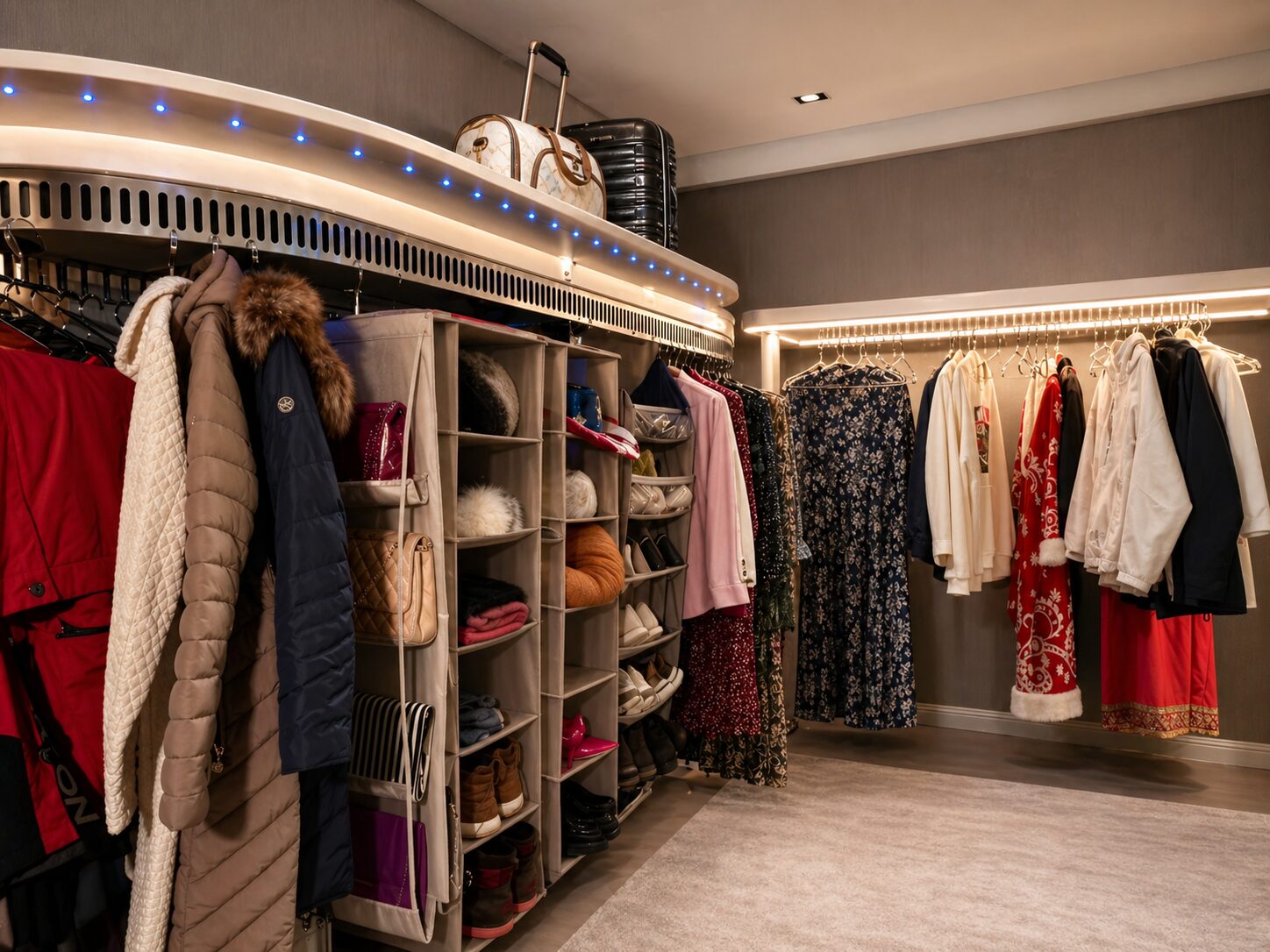
Practical storage ideas do not require every item to move. Shoes, folded clothing and handbags may use fixed shelves or compatible organizers. Select the storage method according to the item and its normal use.
See the guide to garment and accessory storage zones for planning item-specific zones. Useful smart closet storage ideas keep the powered section focused on the clothing that benefits from improved access.
Check the Whole Room
Record doors, drawers, light fixtures and outlets as well as the storage area. Practical storage ideas should work with these elements in their normal operating positions. Leave room to dress, load garments and reach controls.
The closet carousel layout guide shows how to separate the equipment footprint, moving envelope and walking area. The home clothes conveyor installation guide provides the preparation checklist for an equipment review.

Turn Ideas Into a Project Request
To evaluate smart closet storage ideas with Fresh USA, send usable dimensions, photographs and a sketch of the difficult areas. Identify ceiling changes, available supports, clothing quantity and the items you need to reach most often.
Fresh USA can review whether its equipment is appropriate for the proposed space. Confirm the actual model, mounting conditions and project scope before building surrounding cabinetry.
Frequently Asked Questions
Do smart closet storage ideas require electronic integration?
No. Here, smart means planning around access and usable space. A powered mechanism does not by itself establish compatibility with a home automation platform.
Can every under-stair area use moving storage?
Fit depends on usable height, depth, access and the full clothing route. Fixed storage may be a better choice for restricted sections.
Where should I start?
Start practical storage ideas with the access problem and room measurements. Compare equipment only after those limits are clear.
How do I organize the contents afterward?
Use the wardrobe organization guide for clothing categories, seasonal rotation and a practical return routine.
Discuss Your Project With Fresh USA
Gallery and Videos